

By Hamesh Patel & Alicia Josa-Cullere
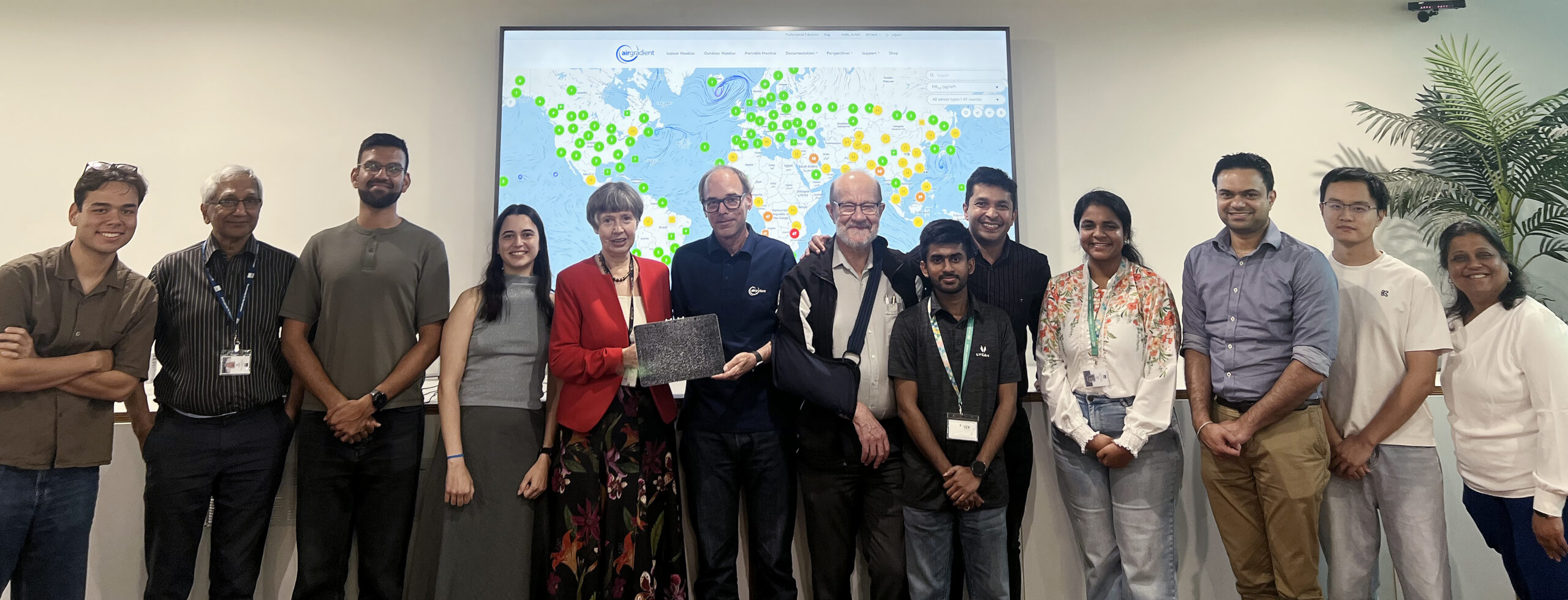
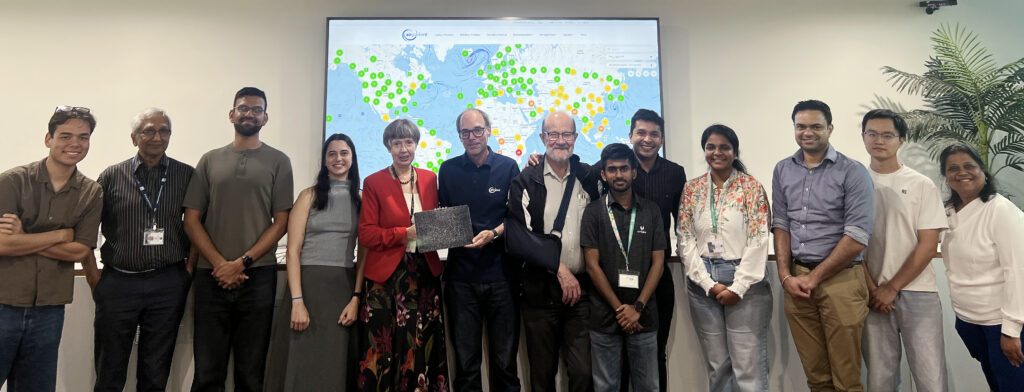
Achim Haug, Founder and CEO of AirGradient, visited the team to share their story behind the technology, the company’s open-source philosophy, and its growing global impact. AirGradient ONE monitors were recently selected for P-Block’s indoor air quality (IAQ) monitoring network.
Achim’s journey into air quality began out of necessity while living in Thailand. During the region’s severe agricultural burning period, air pollutant concentrations frequently reached 50 to 100 times above the World Health Organisation guidelines. This posed a huge risk to the health of local communities, including schools. In response, Achim launched a community-led project in which residents assembled do-it-yourself air quality monitors from recycled plastic containers and built simple air purifiers using off-the-shelf fans and filters to improve classroom air quality.
‘We couldn’t stop the fires so quickly, but we could engage with the children,’ Achim recalled. They invited local students to learn about safety and advocacy.
What began as a volunteer initiative has since scaled into a global social impact enterprise with over 16,000 monitors sold, more than 85,000 downloads of open-source designs and over 7000 community members globally. AirGradient relies on an open-source framework under Creative Commons licenses (CC-BY-SA). All hardware schematics, printed circuit board (PCB) designs, and firmware are publicly accessible on GitHub, allowing researchers, non-profits, and developers to inspect, customise, and deploy units freely without subscriptions or vendor lock-in.
Achim highlighted how this open approach engages rapid community innovation, enables volunteer software integrations, and builds long-term trust across global research initiatives. AirGradient hardware currently operates across major international deployments, including:
- Solomon Islands: A project with UNICEF and UNSW deploying 39 outdoor air quality monitors, co-located alongside other instrumentation to track the island’s air pollution.
- Laos: A nationwide deployment of 160 monitors alongside the UNICEF Office of Innovation, expanding coverage from a single embassy monitor to hundreds of units for AI-driven forecasting.
- United Kingdom: The SAMHE initiative, placing indoor air monitors across 1,300 UK schools in partnership with five UK universities (University of Cambridge, Imperial College London, University of York (through the Stockholm Environment Institute‘s York centre), University of Surrey, University of Leeds) and the UK Health Security Agency (UKHSA).
AirGradient maintains strict internal calibration protocols while offering low-cost hardware. Every manufactured unit undergoes testing inside an environmental chamber co-located with a European Union reference-grade instrument (Palas FIDAS 200). Their devices are also being collocated around the world and are externally validated.
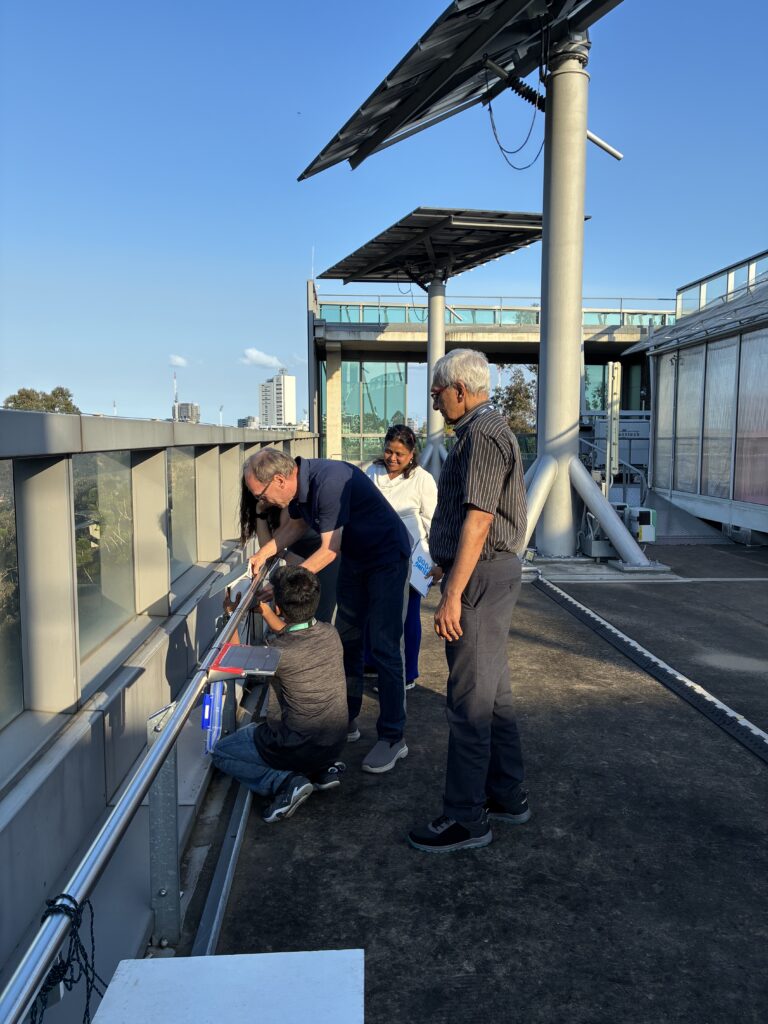
With installation of the P-Block air quality monitoring network set to begin on Level 8 in October, Achim’s presentation provided valuable technical and practical insights, philosophy, and open-data platform that will soon deliver live IAQ data to the project.